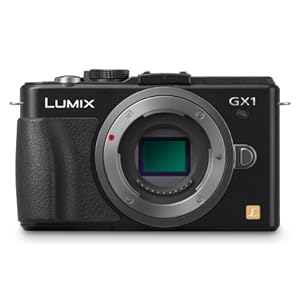
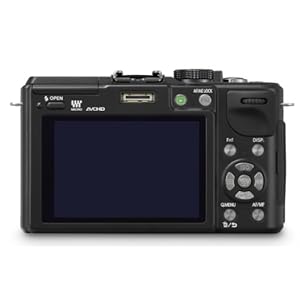
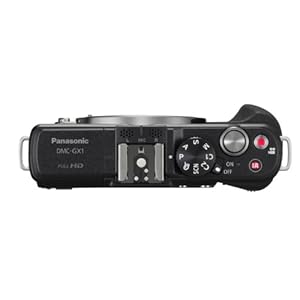
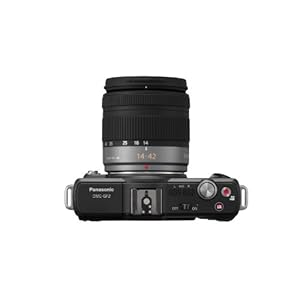
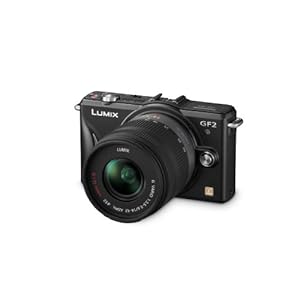
For the majority of people looking for a "pocket" camera - they can stop looking. This will honestly do for pretty much everything you really need. It's the newly released little brother to the more expensive ZS10/TZ20.
It is not perfect, of course, but even if you take a "money no object" approach to picking an upper premium compact camera - there is currently nothing on the market that is head and shoulders better than this - although there can always be a case made for different qualities.
Big Zoom - check
Good "glass" on the front - yep, Leica
Optical Image Stabilisation - uh huh, works quietly and efficiently in the background making your shots less blurry.
Good quality photos - sure - but with the caveat that a "full on" digital SLR will always do better. The photos come out are a nice colour (not too vivid - but also not too washed out) and they don't come out a funny colour under artificial lighting (some cameras can struggle and give you a funny tint under striplights or old fashioned tungsten bulbs).
Noise levels - the "speckly" bits on photos that you sometimes get in dark conditions - is definitely there - especially at higher ISO's - but you get this problem in dim lighting conditions even with all compact cameras to a greater or lesser degree. Even if you get an SLR camera - even up to a year or so ago - you'll find that they aren't infallible to this either.
HD Video - check, but in MPEG format. I think that this takes up more space than the newer AVCHD format on the SZ10/TZ18 - but I would be wary of getting a camera that uses this format if you have an older PC or laptop and especially if you have a netbook - in case the hardware can't cope. I guess Windows XP/NT/2000 users should definitely be careful - and to a lesser extent even if you have a Windows Vista machines you might think twice - especially if you are on a laptop where the hardware will always be slower than the equivalent price PC.
I have a mixture of laptops and netbooks running Windows 7 through to XP so didn't want to take the chance - especially as other family members and the kids will probably want to view some of the footage (family and my kids have the older machines whilst dad gets the upgrade LOL).
I do wonder if the AVCHD format on the more expensive ZS10/TZ20 is going to be a bit of an evolutionary dead end - just as BLU RAY hasn't really taken off - even though it's technically better than DVD - most people even if they have a big widescreen TV find that their DVD is fine (probably because the modern DVD players and TV's will upscale the DVD resolution to give a semi-HD picture quality). The ZS10/TZ20 I think gives you the option to record in both (I think I read that somewhere but if this a deal breaker you should check to be sure).
If you only want a great point and shoot camera this is brilliant and has loads of options. Not only that but the options are really well laid out and easy to understand - by which I mean the dials and menus are set out in a common sense fashion and also instead of just little symbols/icons to indicate that you are in portrait mode or landscape mode - there is a little text underneath which tells you what it will do.
I've had a number of Nikon's and Canon's - and for some reason they can still make cameras with menus and buttons that were laid out by Martians - they can be so unintuitive even for people who are really experienced photographers - and you have to keep referring to the instruction book to work out what to press or what menu icon you are looking for - and even then it doesn't stick in the memory because it's all so counter-intuitive.
If you think you might - in a little while - like to step up in your photography later and get a bit more creative - or you are thinking of this a second camera to augment your SLR - then you'll want to know that this has A LOT of manual control thrown in which is pretty unusual in the compact camera class and it has Aperture Priority, Shutter Priority and Full Manual modes which is quite a rarity in the pocket camera class.
If you are an experienced SLR user, I can tell you that the PASM options are pretty nicely implemented. Sensibly placed access buttons (the small round exposure button and Q Menu buttons to the right of the screen do this) and the menus are nicely set up to easily access the bits you want for Aperture / Shutter priority / full manual control. It'll never be as good as your SLR but you can't carry that around with you this easily and it won't shoot HD video either (or probably not unless you have the latest generation).
The 16x optical zoom is class leading. You can get really good close ups if you want to.
You should only compare OPTICAL zoom when you are looking at different cameras and ignore the Panasonic advertising guys (or anybody else )who point to the overall 20x zoom - because if you include the quoted digital zoom - the extra 4x zoom basically just crops your optical zoom photo in camera - and your laptop software will do that - only better - though I guess it might be relevant if you don't want to be doing with all that and just need an "okay" sort of photo).
Panasonic Lumix DMC-ZS8 also has a really good wide angle lens - 24mm - which basically means you can get more scenery in the shot at the edges. The lower the number the better - and 24mm is currently the lowest I am aware of. The lower the number the more you can fit into the photo - so if you are looking at a nice panorama or want to take a photo with the whole table in the shot - you are more likely to get it with this lens than say if you compared it to other cameras - whose lens might start at 27mm, 28mm, 35mm. This small difference can be the difference between getting everything or maybe not quite getting everything into the shot that you want to.
It is not perfect, of course, but even if you take a "money no object" approach to picking an upper premium compact camera - there is currently nothing on the market that is head and shoulders better than this - although there can always be a case made for different qualities.
Big Zoom - check
Good "glass" on the front - yep, Leica
Optical Image Stabilisation - uh huh, works quietly and efficiently in the background making your shots less blurry.
Good quality photos - sure - but with the caveat that a "full on" digital SLR will always do better. The photos come out are a nice colour (not too vivid - but also not too washed out) and they don't come out a funny colour under artificial lighting (some cameras can struggle and give you a funny tint under striplights or old fashioned tungsten bulbs).
Noise levels - the "speckly" bits on photos that you sometimes get in dark conditions - is definitely there - especially at higher ISO's - but you get this problem in dim lighting conditions even with all compact cameras to a greater or lesser degree. Even if you get an SLR camera - even up to a year or so ago - you'll find that they aren't infallible to this either.
HD Video - check, but in MPEG format. I think that this takes up more space than the newer AVCHD format on the SZ10/TZ18 - but I would be wary of getting a camera that uses this format if you have an older PC or laptop and especially if you have a netbook - in case the hardware can't cope. I guess Windows XP/NT/2000 users should definitely be careful - and to a lesser extent even if you have a Windows Vista machines you might think twice - especially if you are on a laptop where the hardware will always be slower than the equivalent price PC.
I have a mixture of laptops and netbooks running Windows 7 through to XP so didn't want to take the chance - especially as other family members and the kids will probably want to view some of the footage (family and my kids have the older machines whilst dad gets the upgrade LOL).
I do wonder if the AVCHD format on the more expensive ZS10/TZ20 is going to be a bit of an evolutionary dead end - just as BLU RAY hasn't really taken off - even though it's technically better than DVD - most people even if they have a big widescreen TV find that their DVD is fine (probably because the modern DVD players and TV's will upscale the DVD resolution to give a semi-HD picture quality). The ZS10/TZ20 I think gives you the option to record in both (I think I read that somewhere but if this a deal breaker you should check to be sure).
If you only want a great point and shoot camera this is brilliant and has loads of options. Not only that but the options are really well laid out and easy to understand - by which I mean the dials and menus are set out in a common sense fashion and also instead of just little symbols/icons to indicate that you are in portrait mode or landscape mode - there is a little text underneath which tells you what it will do.
I've had a number of Nikon's and Canon's - and for some reason they can still make cameras with menus and buttons that were laid out by Martians - they can be so unintuitive even for people who are really experienced photographers - and you have to keep referring to the instruction book to work out what to press or what menu icon you are looking for - and even then it doesn't stick in the memory because it's all so counter-intuitive.
If you think you might - in a little while - like to step up in your photography later and get a bit more creative - or you are thinking of this a second camera to augment your SLR - then you'll want to know that this has A LOT of manual control thrown in which is pretty unusual in the compact camera class and it has Aperture Priority, Shutter Priority and Full Manual modes which is quite a rarity in the pocket camera class.
If you are an experienced SLR user, I can tell you that the PASM options are pretty nicely implemented. Sensibly placed access buttons (the small round exposure button and Q Menu buttons to the right of the screen do this) and the menus are nicely set up to easily access the bits you want for Aperture / Shutter priority / full manual control. It'll never be as good as your SLR but you can't carry that around with you this easily and it won't shoot HD video either (or probably not unless you have the latest generation).
The 16x optical zoom is class leading. You can get really good close ups if you want to.
You should only compare OPTICAL zoom when you are looking at different cameras and ignore the Panasonic advertising guys (or anybody else )who point to the overall 20x zoom - because if you include the quoted digital zoom - the extra 4x zoom basically just crops your optical zoom photo in camera - and your laptop software will do that - only better - though I guess it might be relevant if you don't want to be doing with all that and just need an "okay" sort of photo).
Panasonic Lumix DMC-ZS8 also has a really good wide angle lens - 24mm - which basically means you can get more scenery in the shot at the edges. The lower the number the better - and 24mm is currently the lowest I am aware of. The lower the number the more you can fit into the photo - so if you are looking at a nice panorama or want to take a photo with the whole table in the shot - you are more likely to get it with this lens than say if you compared it to other cameras - whose lens might start at 27mm, 28mm, 35mm. This small difference can be the difference between getting everything or maybe not quite getting everything into the shot that you want to.

OVERALL it feels nice in the hand - and it is quite light. It has a cool solid feel metal body and all the buttons and switches feel like they will last.
Of course none of this would be of any use if the photos weren't top notch ... but luckily they are in my opinion. Sure, you can get a little better photos perhaps - but bear in mind if you are reading other reviews - a lot of this is personal preference - like how you like your TV at home to be set up with brighter or more vivid colours or more contrast etc.
In technical terms - compact cameras are never going to match SLR cameras - because their sensors just aren't as big. This is also one of the reasons that you get more "noise" (or speckly bits) in photos from pocket cameras. The camera reviewers who do this for a living always seem to forget they are reviewing a pocket camera - as they probably all have SLR's at home - and they get a bit obsessed about how the photo appears when you look up close with a magnifying glass. Surely most people simply look at their photo on their laptop/Mac/PC and go "ooh that's nice" before deciding whether to print it or not ?
Bottom line - this gives great photos that I am more than happy with even compared with my SLR (a two year old Pentax K20) - and if you want a compact/pocket camera with the ability to take great scenery or panoramic shots and then also zoom really close on things as well then this will do a great job for you. I think you'll be pleased with this as your main or secondary camera. Try not to get too hung up on specialist reviews - a compact camera is never going to give you technical quality photos of a large SLR - but you can video with it and even the newer SLR's don't do that very well - though heaven knows why not - maybe they just have a slow escalation marketing policy and are going to deliver that to the market as the desire for SLR's with video capability increases. And remember that if you wanted a whopping great SLR you'd have got a whopping great SLR.
Also - go and have a look at all the cameras "in the flesh" in a store - to see if the size suits you. There aren't any smaller camera's with this big a zoom, but there are plenty of camera's which are smaller and more pocket / handbag friendly.
IF you consider the size too big then you should definitely look at other camera's, but if the huge range zoom is just what you are looking for (like me) - then this is for you I reckon (unless you have a strong loyalty for one or other brand in particular I guess).
IF you really want lower noise on high ISO photos but don't want an SLR and still want the big zoom then do have a look around at the competition and check out the specialist website reviews.
IF you just want a nice pocket camera that gives you nice photos - but you are on a budget then you should look at the outgoing models from all of the manufacturers - but do have a look at Fuji as they have currently (March 28th 2011) some nice deals on their outgoing models which would give you good zoom and reasonable photos eg Fuji Finepix with 10x zoom 12MP photos.
And finally don't get hung up on the megapixels on a compact camera. The quality of the "glass" on the front of the camera is likely going to have just a big - if not bigger impact. Although there are exceptions - more expensive usually equals better glass. This is why getting a formerly $400+ camera which is currently being discounted due to a newer incoming model can be a worthwhile strategy - as the originally more expensive camera will generally have better quality lenses. Anything above 10MP is going to be fine 90% of the time - and more megapixels actually often means more grainy photos in darker conditions.
Of course none of this would be of any use if the photos weren't top notch ... but luckily they are in my opinion. Sure, you can get a little better photos perhaps - but bear in mind if you are reading other reviews - a lot of this is personal preference - like how you like your TV at home to be set up with brighter or more vivid colours or more contrast etc.
In technical terms - compact cameras are never going to match SLR cameras - because their sensors just aren't as big. This is also one of the reasons that you get more "noise" (or speckly bits) in photos from pocket cameras. The camera reviewers who do this for a living always seem to forget they are reviewing a pocket camera - as they probably all have SLR's at home - and they get a bit obsessed about how the photo appears when you look up close with a magnifying glass. Surely most people simply look at their photo on their laptop/Mac/PC and go "ooh that's nice" before deciding whether to print it or not ?
Bottom line - this gives great photos that I am more than happy with even compared with my SLR (a two year old Pentax K20) - and if you want a compact/pocket camera with the ability to take great scenery or panoramic shots and then also zoom really close on things as well then this will do a great job for you. I think you'll be pleased with this as your main or secondary camera. Try not to get too hung up on specialist reviews - a compact camera is never going to give you technical quality photos of a large SLR - but you can video with it and even the newer SLR's don't do that very well - though heaven knows why not - maybe they just have a slow escalation marketing policy and are going to deliver that to the market as the desire for SLR's with video capability increases. And remember that if you wanted a whopping great SLR you'd have got a whopping great SLR.
Also - go and have a look at all the cameras "in the flesh" in a store - to see if the size suits you. There aren't any smaller camera's with this big a zoom, but there are plenty of camera's which are smaller and more pocket / handbag friendly.
IF you consider the size too big then you should definitely look at other camera's, but if the huge range zoom is just what you are looking for (like me) - then this is for you I reckon (unless you have a strong loyalty for one or other brand in particular I guess).
IF you really want lower noise on high ISO photos but don't want an SLR and still want the big zoom then do have a look around at the competition and check out the specialist website reviews.
IF you just want a nice pocket camera that gives you nice photos - but you are on a budget then you should look at the outgoing models from all of the manufacturers - but do have a look at Fuji as they have currently (March 28th 2011) some nice deals on their outgoing models which would give you good zoom and reasonable photos eg Fuji Finepix with 10x zoom 12MP photos.
And finally don't get hung up on the megapixels on a compact camera. The quality of the "glass" on the front of the camera is likely going to have just a big - if not bigger impact. Although there are exceptions - more expensive usually equals better glass. This is why getting a formerly $400+ camera which is currently being discounted due to a newer incoming model can be a worthwhile strategy - as the originally more expensive camera will generally have better quality lenses. Anything above 10MP is going to be fine 90% of the time - and more megapixels actually often means more grainy photos in darker conditions.